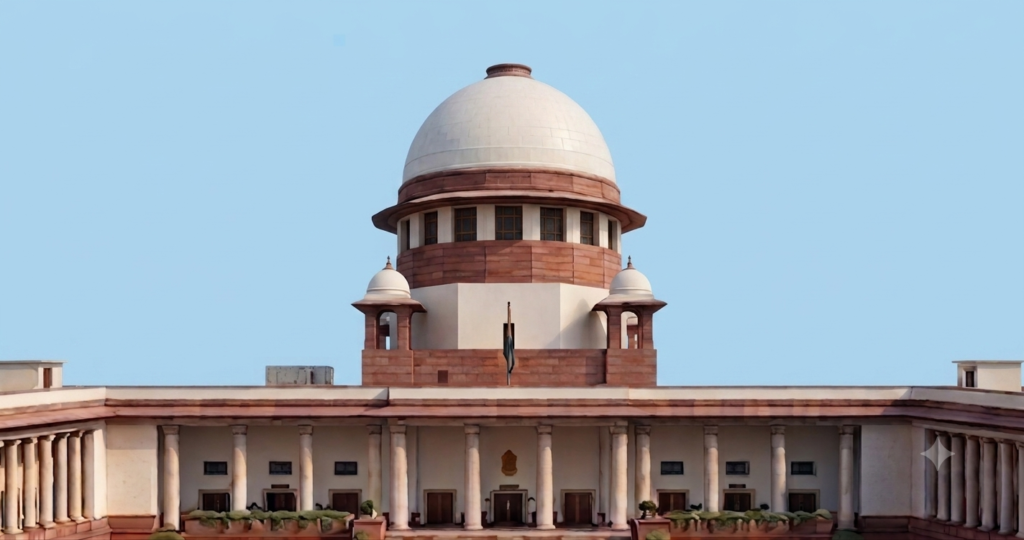
In Arun Jani v. State of Orissa [1], the Supreme Court emphasized that courts must exercise a liberal or rather a proactive approach in condoning the delay in appeals filed by convicts. The Supreme Court’s reasoning stems out of deep introspection made with respect to the realities of criminal justice system and the plight of marginalized communities, especially when an appeal is filed by a convict from jail and concerns with life and personal liberty of an individual.
Factual Context & Judgment of the Court
The appellant, having been convicted under Section 302 of the IPC and sentenced to life imprisonment, challenged the Orissa High Court’s dismissal of his criminal appeal and his application to condone a 3,157-day delay. Adjudicating the matter, the Supreme Court highlighted the plight of our legal system, observing that access to justice still eludes marginalized communities, who suffer the most during conviction and appellate stages. Since a jail memo of appeal is filed from within the prison, forcing the convict to rely entirely on institutional legal aid like the District Legal Services Authority, the Court stated that constitutional courts must sensitize themselves to these stark administrative realities. Accordingly, courts must adopt a proactive approach in condoning such delays, ensuring that the fundamental right to life and personal liberty under Article 21 is not lost to a mere procedural rule.
Upon evaluating the case on its merits, the Supreme Court found the prosecution’s case highly improbable and riddled with doubt. The entire conviction rested on a single eyewitness whose testimony contained serious discrepancies, such as her failure to notice the other victims’ bodies while fleeing the scene. Furthermore, the investigation was deeply flawed because the investigating officer failed to prepare a basic crime scene sketch, relied on an inadmissible confession extracted through police brutality, and presented forensic evidence that failed to connect the recovered weapons to the crime. Consequently, finding overwhelming reasonable doubt, the Supreme Court set aside the lower court’s judgment and ordered the immediate acquittal of the appellant, Arjun Jani, after he had spent 22 years in prison.
Other Notable Judgments of SC
Under Chapter XXX (Sections 413 to 435) of the Bharatiya Nagarik Suraksha Sanhita, 2023 (BNSS), the right to appeal is strictly statutory. Consequently, no appeal can be preferred against any judgment or order of a criminal court unless it is explicitly authorized by the provisions of the BNSS or any other prevailing law. However, in Dilip S. Dahanukar v. Kotak Mahindra Co. Ltd [2], the Supreme Court held that right to appeal against a conviction is both a statutory and a fundamental right under Article 21, given the expansive interpretation of liberty. The legal position has been reaffirmed and expanded in Mahesh Singh Banzara v. State of Madhya Pradesh [3], and Nagarajan v. State of Tamil Nadu [4], emphasizing that procedural delays cannot be used arbitrarily crush a convict’s fundamental right to appeal. Consequently, while dealing with applications of delay in filing an appeal, courts must examine the reasons and must not dismiss it on technical grounds alone.
- 2026 INSC 802
- (2007) 6 SCC 528
- 2025 LiveLaw (SC) 28
- 2025 INSC 802